
How to Choose a Wedding Flower Color Palette: A Florist's Guide
Your wedding flower color palette should fit your setting, wedding date, dress, and the feeling you want for the day. I use those details to turn the colors you love into one clear floral plan.
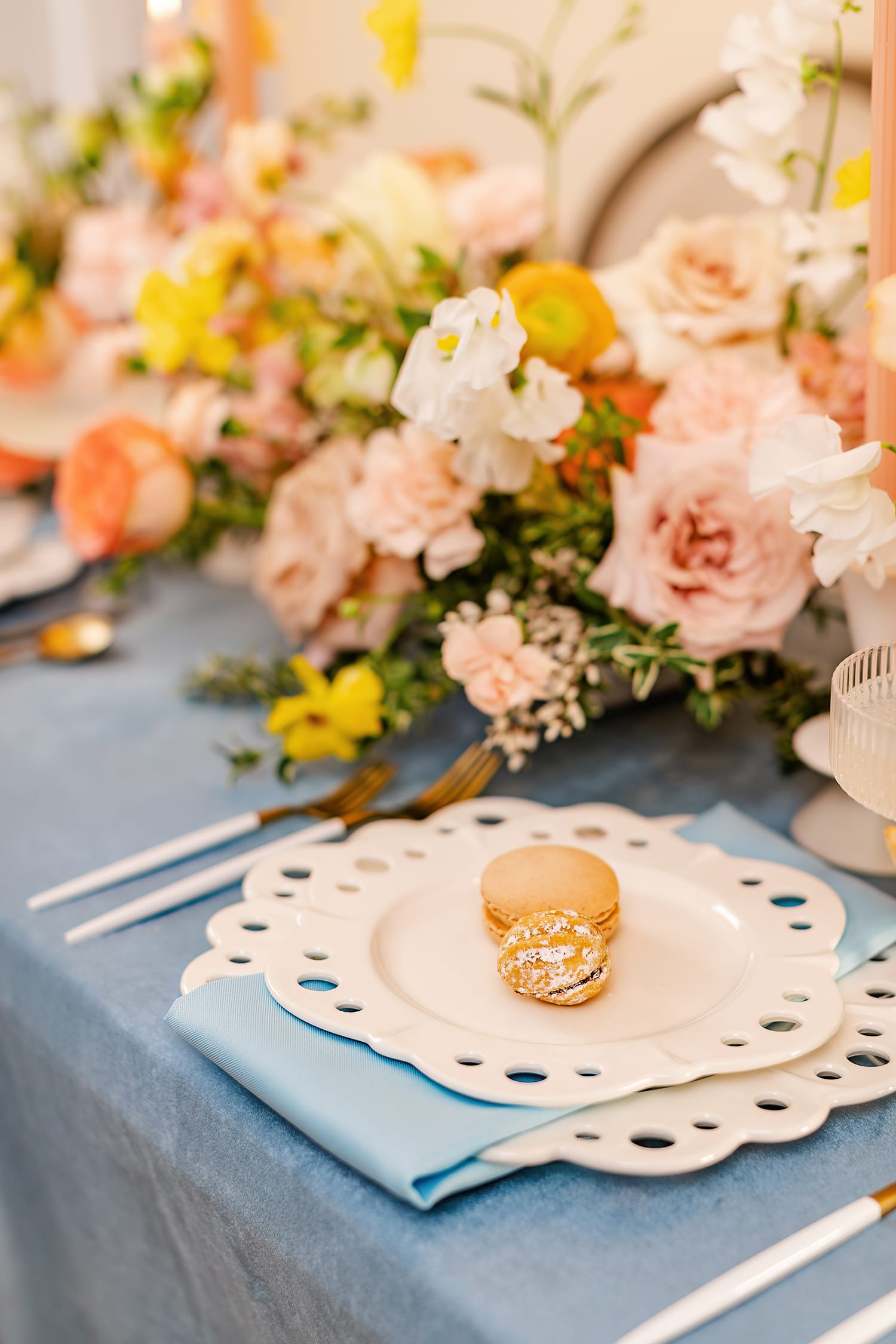
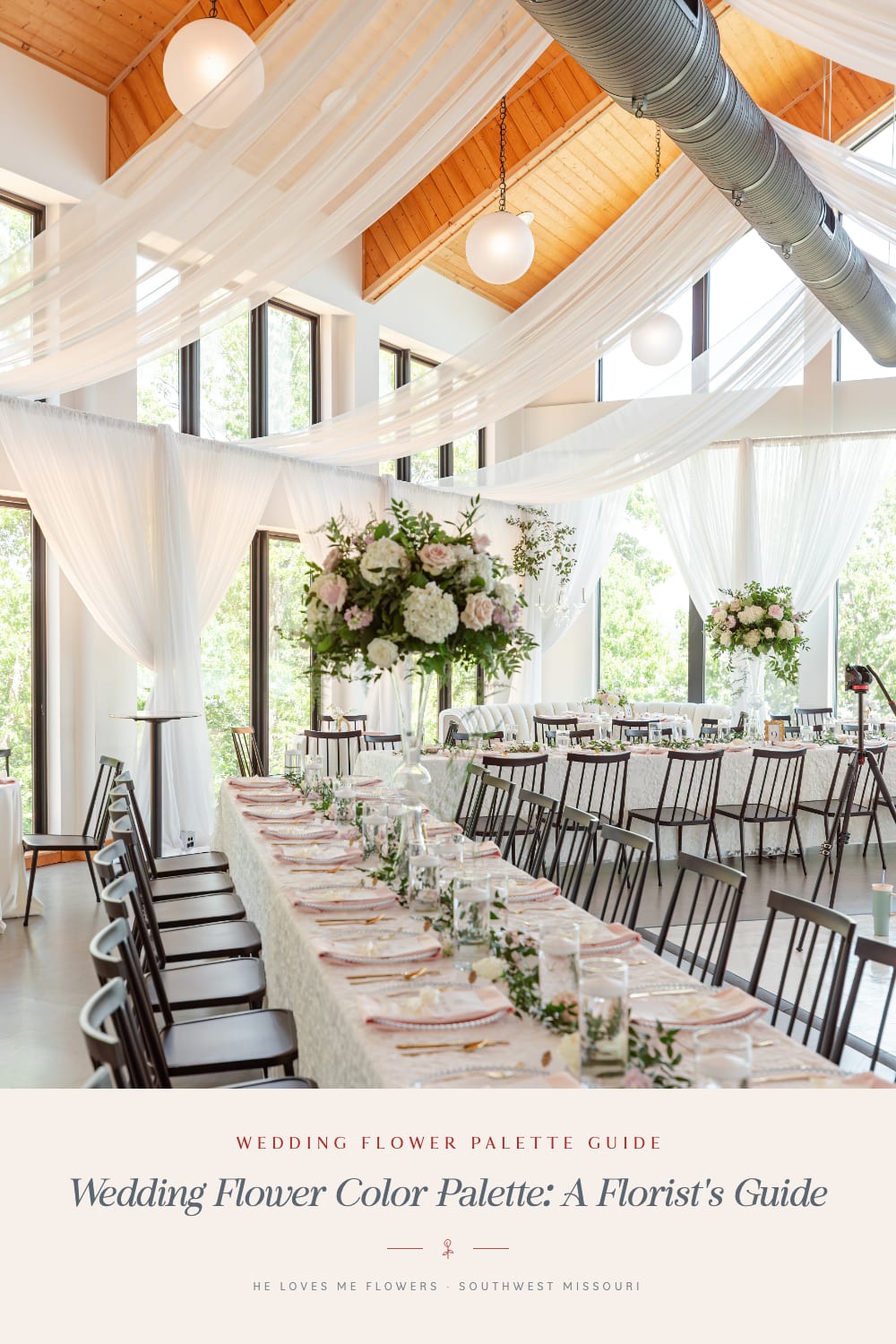
How to choose a wedding flower color palette
When a bride tells me she's overwhelmed by color, it's often because she started with the trends instead of with herself. So I flip it around. Before we talk about any specific color, I ask about four things:
- Your venue's light. A garden-lit afternoon at Glass Haus holds soft, cool tones beautifully; a warm, wood-and-stone space like Big Cedar Lodge makes rich, warm palettes glow. The room is already doing color work; we design with it, not against it.
- The color of your dress. A bright-white gown and a warm ivory gown sit differently against the same flowers. Your bouquet is right against your dress in nearly every photo, so I always design your palette to flatter it.
- The season. What's naturally in bloom shapes what your palette can be. Designing with the season gives you flowers suited to your date, and a look that feels effortless and natural.
- The feeling. This is the one that matters most. Do you want to feel soft and romantic, calm and heirloom, warm and sunlit, moody and dramatic? The feeling tells me more than any color name.
From there, I usually steer toward a tight two- or three-tone palette. A focused palette reads as intentional and timeless. Your Pinterest board is a wonderful starting point for this, and I treat it as a flexible guide. My job is to find the thread running through everything you've saved and design a palette that's unmistakably yours.
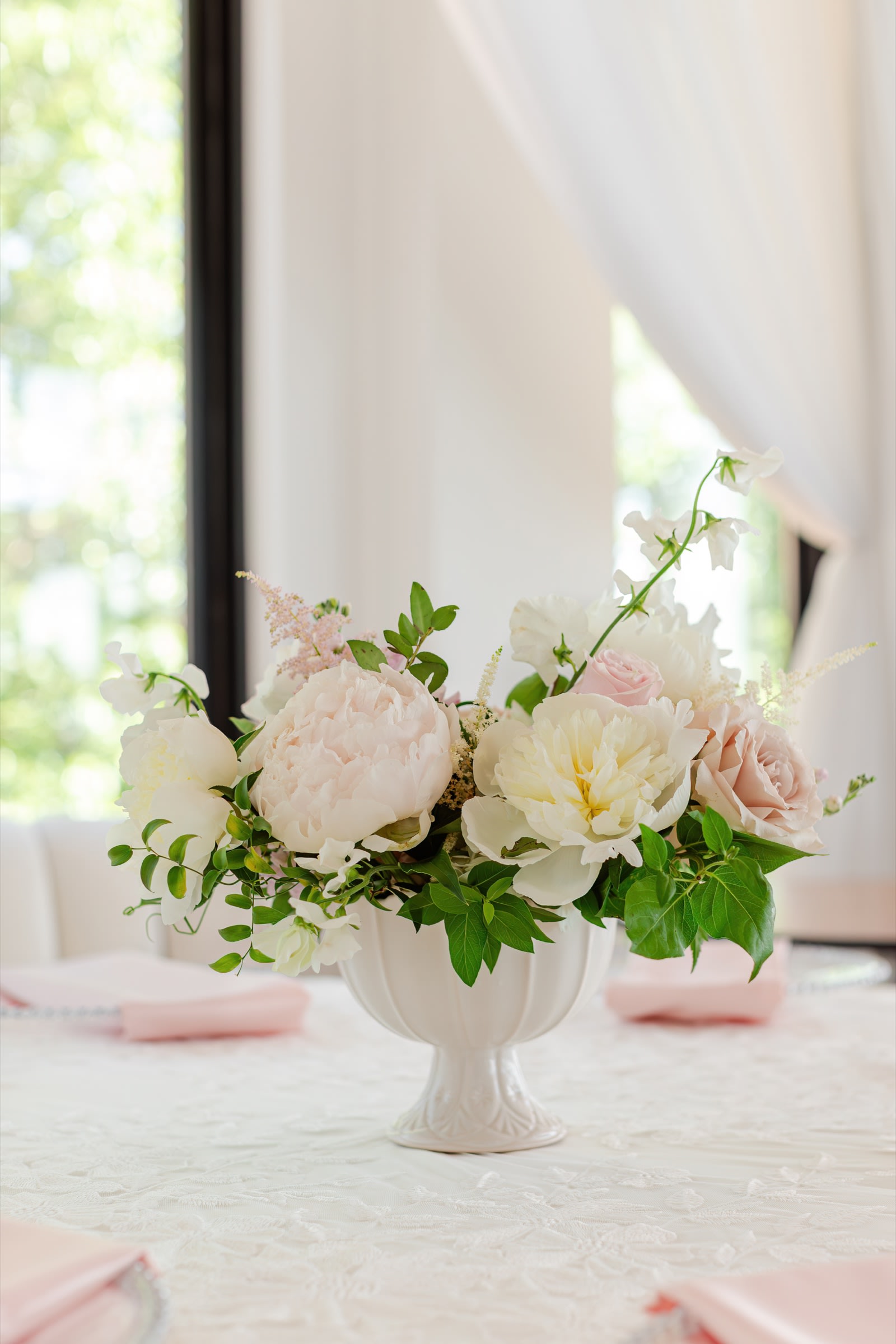
A tour of my favorite wedding flower palettes
Here are the palettes I find myself designing most, and the feeling each one carries. Most link to a fuller guide if one is calling your name.
| Palette | The feeling | A few flowers I reach for |
|---|---|---|
| Blush & cream | Timeless, soft, endlessly romantic | Peonies, garden roses, ranunculus |
| Dusty blue | Calm, a little heirloom | Delphinium, hyacinth, pale greenery |
| Sage green & ivory | Organic, restful, texture-forward | Lisianthus, eucalyptus, olive |
| Burgundy | Moody, romantic, dramatic | Dahlias, garden roses, ranunculus |
| Terracotta | Warm, sunlit, earthy | Roses, amaranthus, dried textures |
| Neutral | Understated, editorial, quiet | Cream roses, toffee accents, grasses |
Blush and cream is the timeless one, a palette that never dates. If you want soft and romantic without a single regret in ten years, this is it.
Dusty blue is calm and a little heirloom, especially paired with cream and pale spring greenery, and a favorite for brides who want romance that feels quiet. Sage green and ivory is the most organic of the group, letting texture and foliage carry the design; it's restful and it suits our Ozarks landscape beautifully.
On the richer end, burgundy is for a couple who wants romance with a deeper, moodier edge. It's stunning in fall and winter. And warm, earthy, sunlit terracotta is the palette more couples are asking about, which brings me to where palettes are heading.
The 2026 wedding palette trend: warm over cool
For years, cool neutrals ruled weddings: greys, icy blues, crisp whites. That's shifting. Many of the palettes couples ask me about now are warm: terracotta, burgundy, rust, caramel, plum, toffee, and mauve, often described in that warm "mocha" family of tones. They feel grounded and romantic, and they photograph like candlelight.
Still, I don't design to a trend. I follow the colors that fit you, whether that means warm terracotta, soft blush, or cool dusty blue.
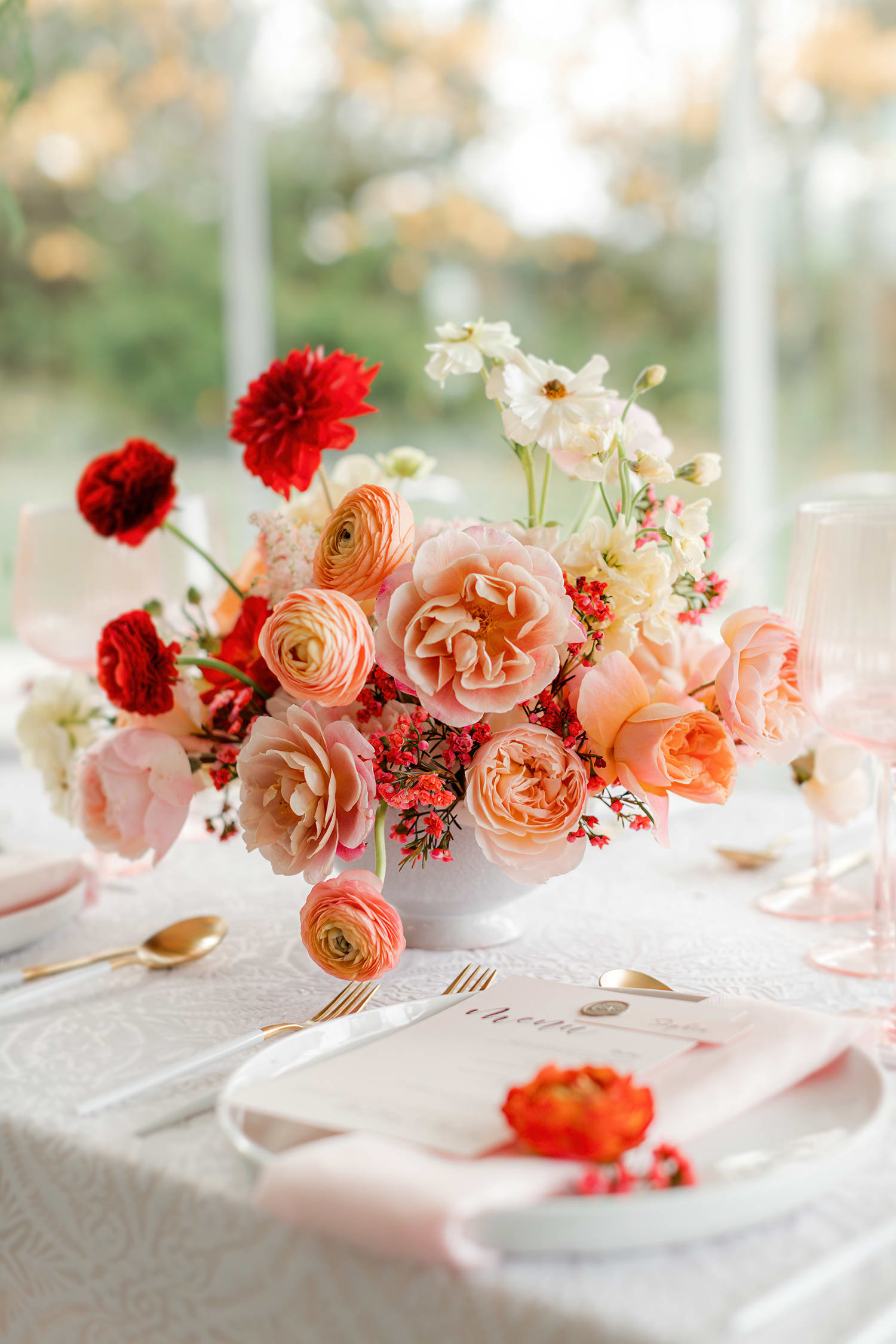
Let the season guide your palette
Your palette and your season are a two-way conversation: the colors you love point toward certain flowers, and what's blooming points back toward certain colors. Designing with the season helps your flowers feel at home on your date.
- A spring palette leans soft and fresh: blush, dusty blue, and sage feel most at home among peonies and ranunculus.
- A summer palette can go either sunlit-warm or crisp and garden-bright, with cosmos, and dahlias in late summer.
- A fall palette is where the warm and moody tones truly sing: burgundy, terracotta, and plum against the changing Ozarks landscape.
- A winter palette can be crisp and icy or deep and jewel-toned, both quietly dramatic.
If a color you love isn't naturally in season for your date, that's never a dead end. It's the start of the conversation. Part of my job is finding an in-season flower that gives you a similar feeling and tone.
How your palette shapes your budget
Wedding flowers are custom, so I never work from a price list. Every wedding is quoted individually based on the types of flowers and the design. But your palette genuinely affects your budget, and in a good way.
The flowers we choose to carry your colors shape your quote, so I help you decide where to focus your floral budget. A focused two- or three-tone palette also tends to look richer for the same investment, because every stem is working toward the same feeling. My promise is a calm, honest conversation about what's possible. Never pressure, and never a hard sell.
Every love story deserves flowers that feel like you.
Frequently asked questions about wedding flower color palettes
How do I choose a wedding flower color palette?
Start with four things: your venue's light, the color of your dress, the season you're marrying in, and the feeling you want to walk into. Build a tight two- or three-tone palette around those, with your story and setting as the guide, so the result feels intentional and true to you.
How many colors should a wedding flower palette have?
I usually steer brides toward a focused two- or three-tone palette. A tighter palette reads as timeless and intentional, and it tends to look richer for the same budget because every flower is working toward the same feeling, rather than pulling in different directions.
What are the most popular wedding flower colors for 2026?
Warm tones are having a real moment: terracotta, burgundy, rust, caramel, plum, toffee, and mauve are replacing the cool neutrals that dominated for years. That said, timeless palettes like blush and cream and calm dusty blue are always beautiful. The best colors are the ones that feel like you.
Should my wedding flower palette match my season?
Designing with your season is a helpful choice, because in-season flowers are well suited to your date. If a color you love isn't naturally in season for your date, I'll look for an in-season flower that gives you a similar tone and feeling.
Do I have to match my wedding flowers to my bridesmaid dresses?
Not exactly. Your flowers should relate to your palette, not copy it. I design bouquets and ceremony pieces that echo your colors and complement your bridal party rather than matching them stem for swatch, which almost always looks more natural and romantic than a literal match.
Your colors are the first thing your flowers say about your day, and they deserve to feel entirely true to you. If you're dreaming of a palette designed around your love story, your venue, and your season, I would love to hear about your day. You can see more of my work and start a conversation with me here.
Photo Credit: Jordan Brittley