

Terracotta Wedding Flowers: A Florist’s Guide to a Warm Color Palette
Terracotta wedding flowers combine rust, clay, caramel, and warm neutral tones. I confirm the flower options for your date, then use your setting to build a palette that feels warm and personal.
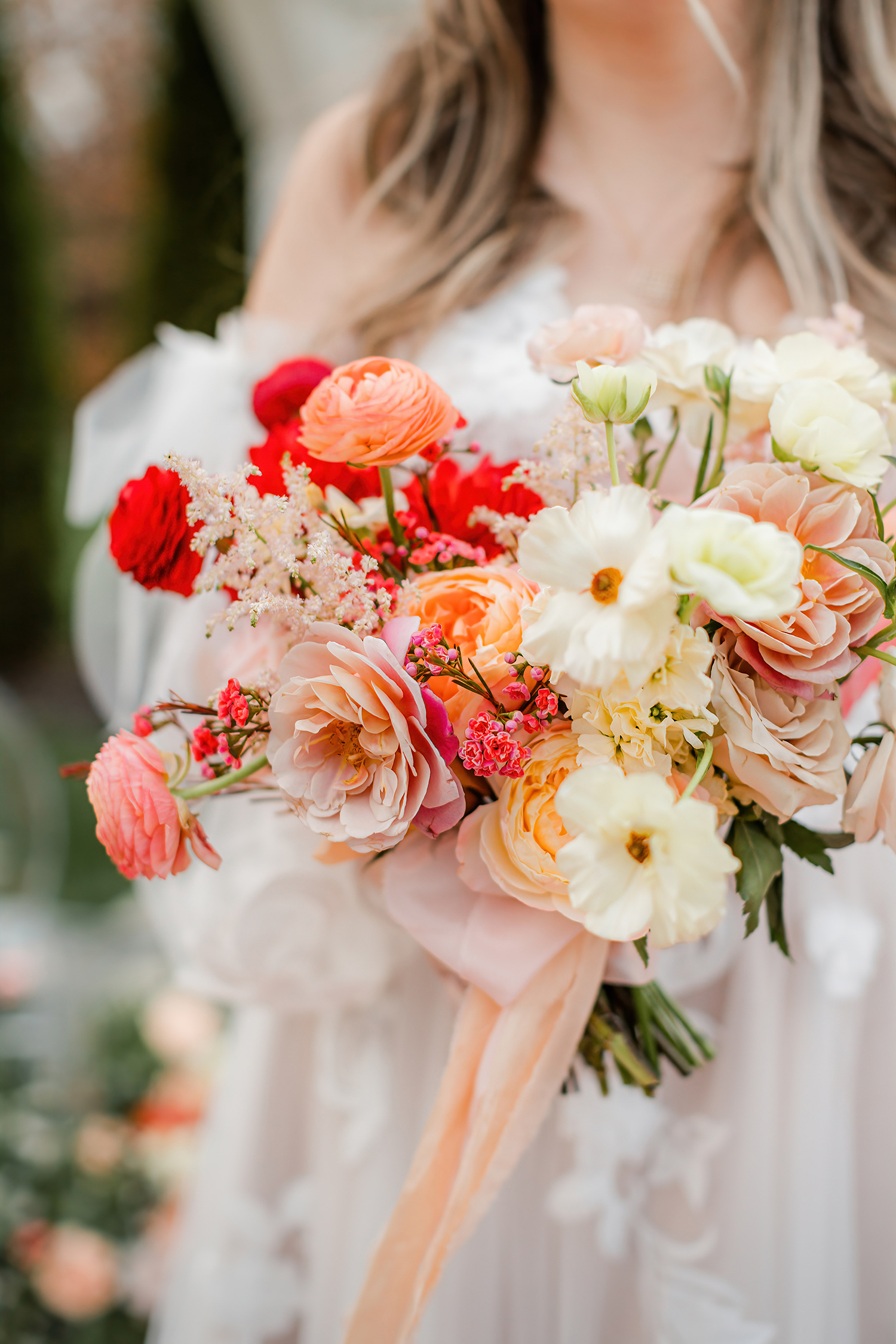
Why I love a terracotta color palette
Many wedding palettes run cool and pale: soft grays, icy blues, crisp whites. A terracotta palette goes warm, with terracotta, rust, caramel, and toffee, tones that feel lived-in and romantic.
Part of the appeal is mood. A terracotta palette has warmth built right into it. It reads like golden hour, like sun on clay, like something a little wild and gathered. It also photographs with gorgeous depth, holding richness in a way pale palettes sometimes can’t.
And it’s wonderfully flexible. Terracotta can lean soft and dusty for a romantic look, or deep and saturated for something moodier and more dramatic. That range is exactly why it’s taken hold. It bends to the couple rather than the other way around.
The blooms that build a terracotta palette
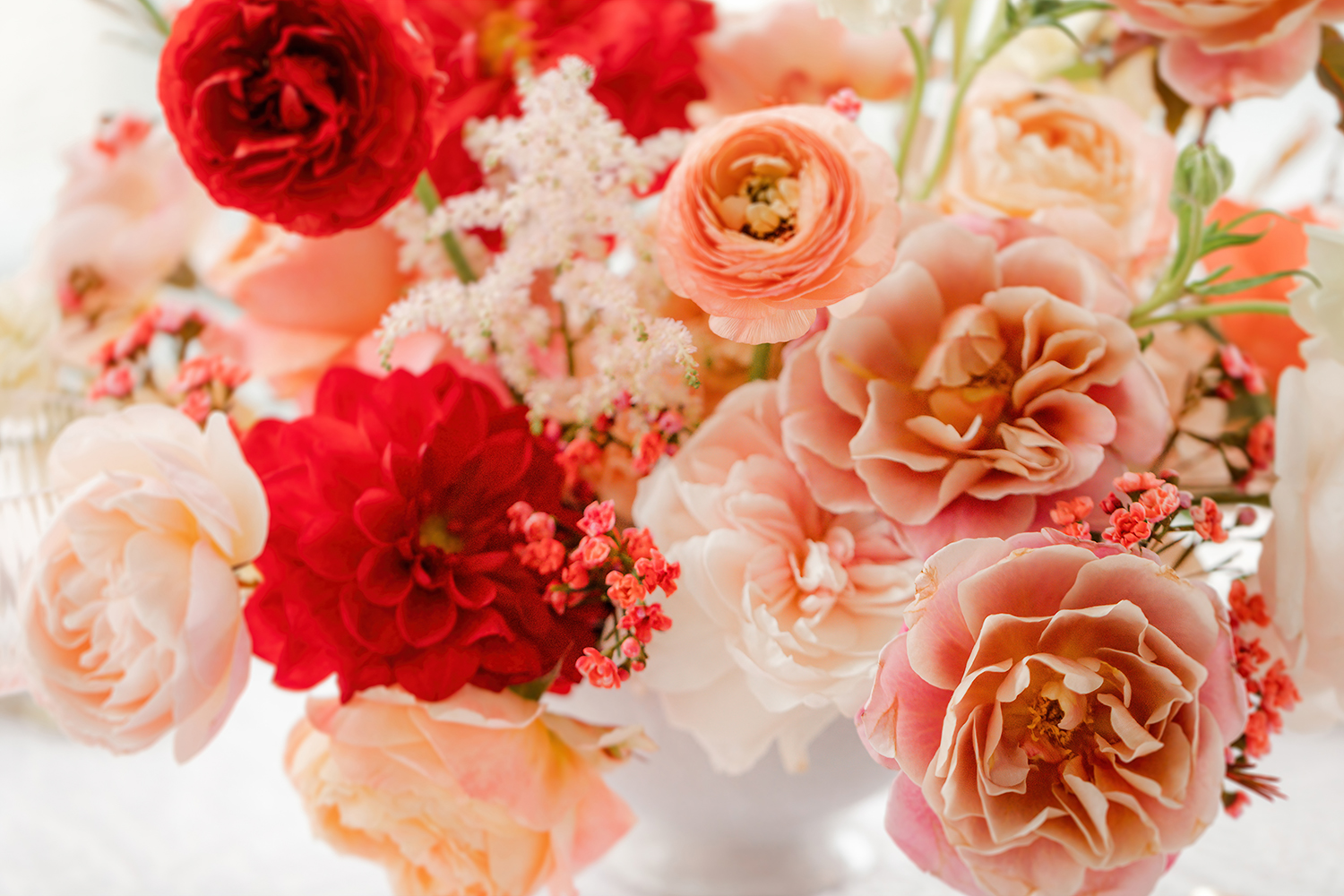
Terracotta isn’t a single flower. It’s a feeling I build from warm-toned blooms layered together. Here are the ones I reach for most for terracotta weddings in Southwest Missouri.
| Bloom | What it brings to a terracotta palette |
|---|---|
| Roses (terracotta, toffee & copper) | The romantic anchor: modern rose varieties come in gorgeous rust and caramel tones. |
| Ranunculus | Layered, papery softness in warm peach, caramel, and copper for movement and light. |
| Dahlias | Big, sculptural, and richly saturated, a showstopping presence in a fall palette. |
| Amaranthus | Trailing, dramatic texture that adds length and a wild, gathered movement. |
| Chrysanthemums & spray mums | Underrated and lush, with warm bronze and rust tones well suited to the season. |
| Carnations (rust & toffee) | Ruffled texture in exactly the right shades, beautiful worked in en masse. |
| Dried elements | Preserved grasses, bunny tail, and dried palm for a sun-washed, textural finish. |
That last row is worth lingering on. Dried and preserved elements are a natural partner to terracotta, adding a matte, sun-baked texture that fresh flowers alone can’t give, and they’re gorgeous woven into a bouquet or an installation. If you love that look, my dried flower wedding bouquet guide goes deeper on designing with them.
Colors that pair beautifully with terracotta
Terracotta is a wonderfully social color. It wants a companion or two. When couples come to me wanting terracotta but unsure how to round it out, these are the pairings I love:
- Terracotta & cream: the softest, most romantic version. Warm without going bold, and endlessly wearable.
- Terracotta & sage: earthy and organic, with the green cooling the warmth just enough. A favorite of mine.
- Terracotta & burgundy: deeper and moodier, gorgeous for a richer fall story. My burgundy wedding flowers guide leans all the way into that depth.
- Terracotta & gold: a little glamour, warm metal catching the warm blooms for a sunlit, celebratory feel.
- Terracotta, rust & mauve: a tighter, tonal two-to-three color palette, soft and modern all at once.
When I build your palette, I’m thinking about the light at your venue, the color of your dress, and the feeling you want to walk into. The most beautiful terracotta weddings I design are the ones where the warm tones are chosen to feel like you. (You’ll find the full season-by-season breakdown in my wedding flower color palette hub.)
Why terracotta suits a Southwest Missouri fall
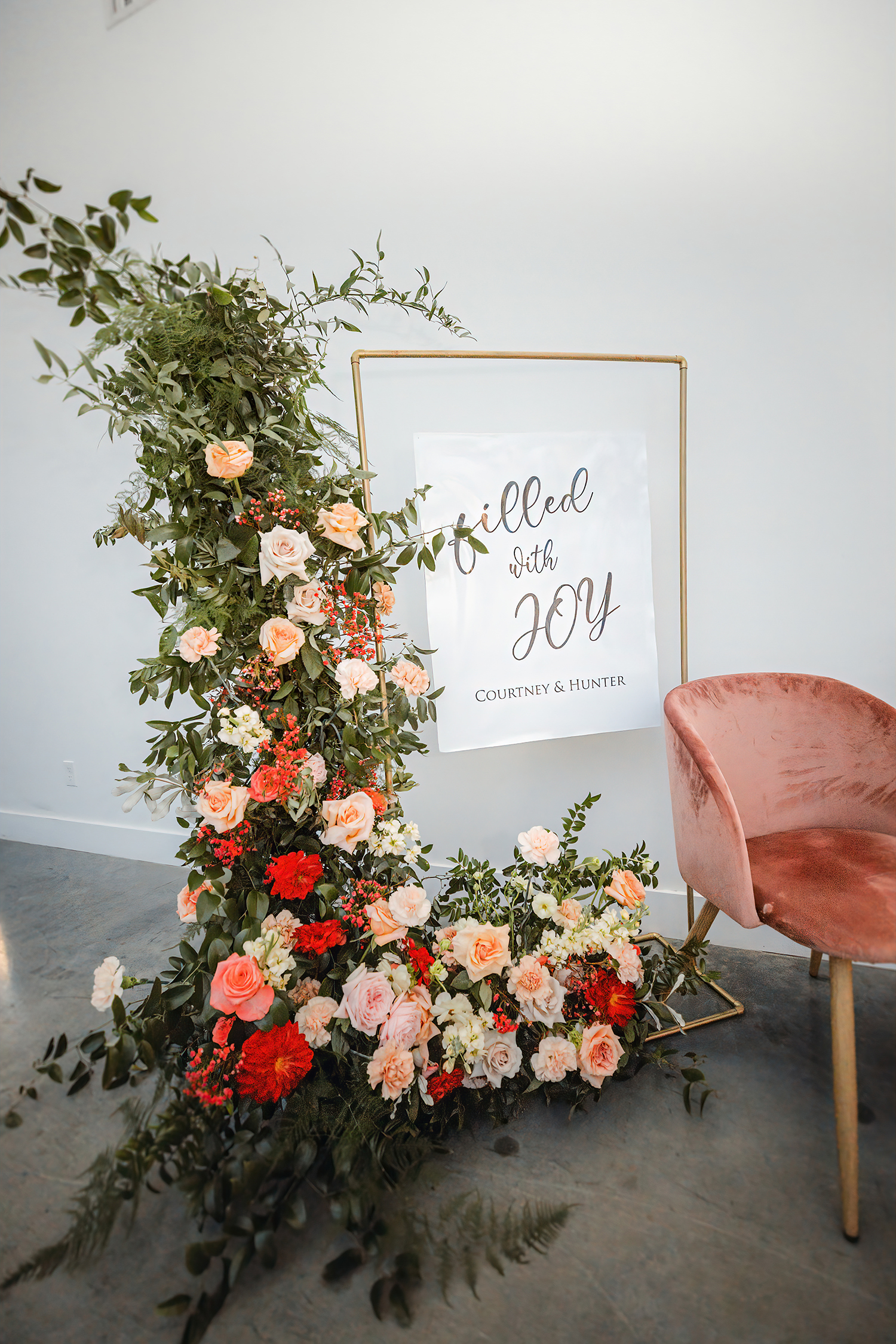
Terracotta and autumn were made for each other. As the Ozarks turn, the landscape itself shifts toward rust and gold, so a terracotta palette echoes your surroundings. A ceremony framed by turning leaves, warm blooms catching low September and October light: it’s one of the most naturally romantic pairings I get to design.
Fall dates book quickly here, and autumn is a season I know well. Southwest Missouri sits in roughly USDA plant hardiness zone 6b–7a, and a warm early-September date and a crisp late-October one can call for slightly different blooms: dahlias and amaranthus at their fall peak, mums and dried textures carrying later into the season. If you’re marrying in autumn, my fall wedding flowers guide walks through everything at its best. And while terracotta feels most at home in fall, a soft, dusty version is lovely for a late-summer or even spring wedding, too.
Designing a terracotta bouquet with movement
A terracotta bouquet feels its best when it has real movement, when amaranthus trails long, dahlias sit low and full, and a little dried texture catches the light at the edges. That garden-gathered, sun-washed asymmetry is the whole point of the palette, and it’s exactly my signature style.
I design your bouquet around your date, venue, colors, priorities, love story, and the vision you share with me.
How I think about your terracotta flower budget
Wedding flowers are custom, so I never work from a price list. Every wedding is quoted individually based on the types of flowers and the design. But I can tell you how I think about it, because a floral budget is really a set of priorities.
We start with what matters most to you, often the bouquet and the ceremony moment, and design outward from there. When the design allows, I may suggest moving ceremony pieces to the reception so you can keep enjoying the flowers throughout the day. My promise is a calm, honest conversation about what’s possible. Never pressure, never a hard sell.
An atmosphere of romance.
Frequently asked questions about terracotta wedding flowers
What flowers are used in a terracotta wedding palette?
Terracotta and toffee roses, warm ranunculus, and saturated dahlias form the romantic core, with trailing amaranthus, bronze chrysanthemums, and rust carnations adding texture. Dried elements like preserved grasses and palm are a natural partner, lending a matte, sun-washed finish.
What colors go with terracotta for a wedding?
Cream keeps it soft and romantic, sage cools and grounds it, and burgundy deepens it into a moodier fall story. Gold adds a little glamour, and a tonal rust-and-mauve palette feels modern and understated. The best pairing is the one that suits your venue’s light and your story.
Is terracotta a good wedding color for fall?
It is one of the most natural fall palettes there is. As the Ozarks turn toward rust and gold, terracotta flowers echo the landscape rather than fight it, and they catch warm autumn light beautifully. Fall dates book quickly here, so reach out early if you are planning an autumn wedding.
Can terracotta wedding flowers work outside of fall?
Yes. While terracotta feels most at home in autumn, a softer, dustier version is lovely for a late-summer or even a spring wedding. Leaning on the paler caramel and peach tones, rather than deep rust, keeps the palette warm without feeling out of season.
How do I keep a terracotta palette from looking too orange?
The trick is balance and tone. I layer terracotta with softer neutrals like cream and mauve, or ground it with sage and deeper burgundy, so the warm tones read rich and romantic. Choosing dusty, muted rose and dahlia varieties over pure orange blooms keeps it elegant.
If you’re dreaming of a warm, sunlit, gathered-that-morning palette, one that feels entirely true to you, I would love to hear about your day. You can see more of my work and start a conversation with me here.
Photo Credit: Jordan Brittley


