
The Garden-Style Bridal Bouquet: A Florist's Signature Look
A garden-style bridal bouquet uses a loose shape, varied heights, and natural movement. I use your palette, wedding date, and confirmed flower options to design a bouquet that feels true to you.
What makes a bouquet "garden-style"?
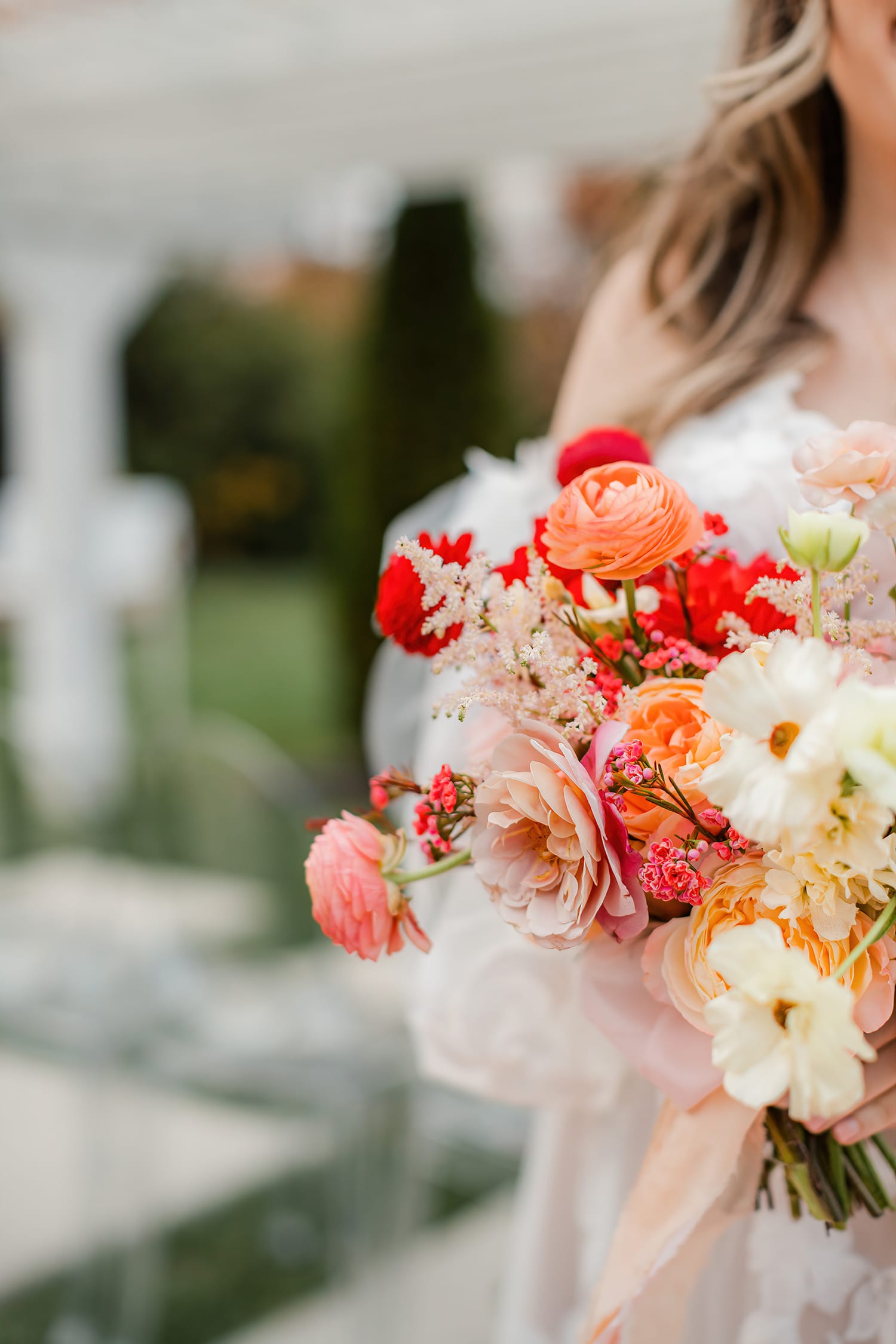
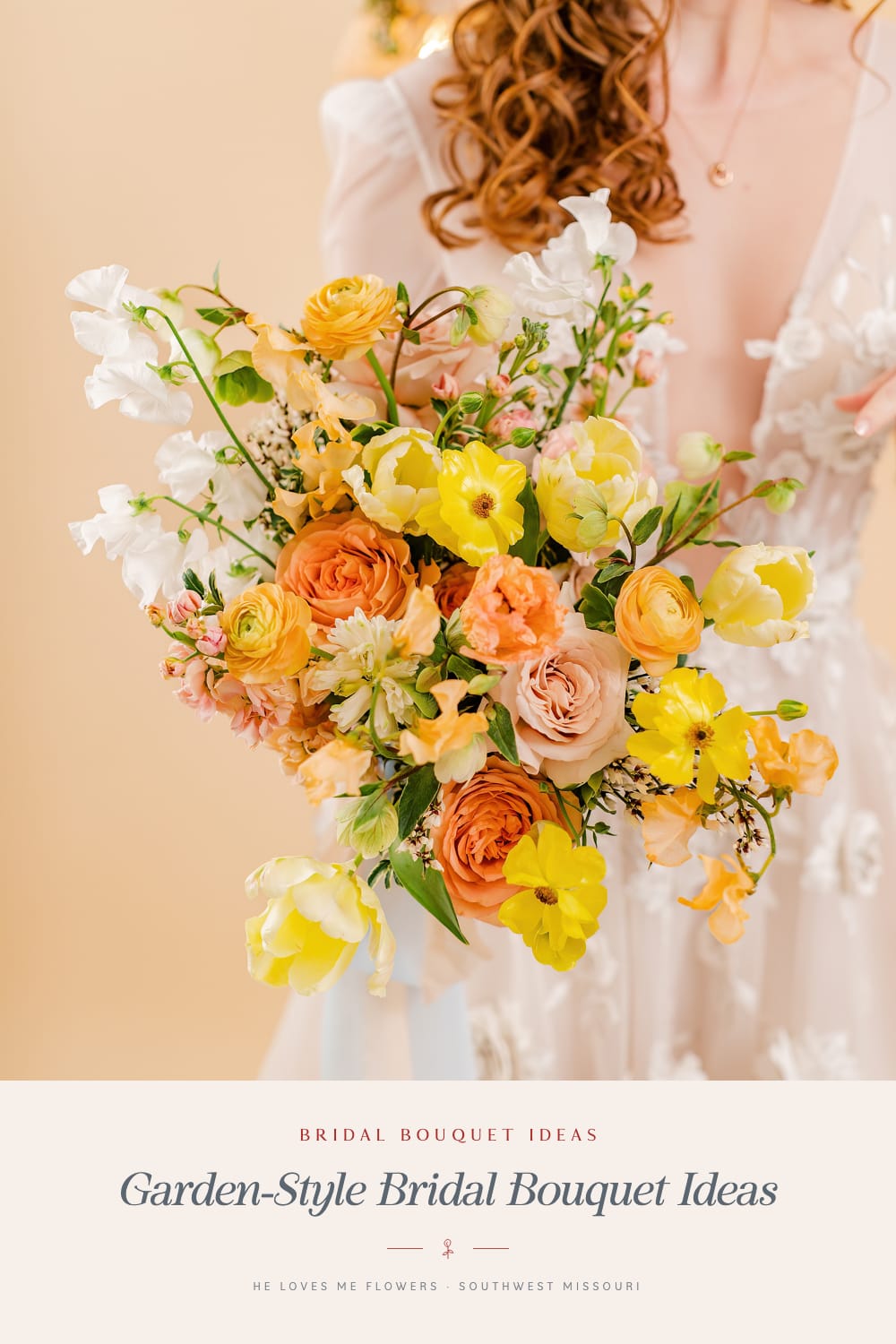
A garden-style bouquet has a loose, organic shape with flowers placed at different heights and depths.
A garden-style bouquet lets go of tight structure on purpose. A few things define it:
- Asymmetry. It's fuller on one side, with flowers set at different heights and depths rather than a flat, even surface. The shape feels collected, not clipped.
- Movement. Stems arch and lean the way they would in a garden: a tulip bending toward the light, sweet peas trailing, a spray rose reaching out past the edge. Nothing is forced into a mold.
- Texture and layering. It mixes big focal blooms with small, delicate ones and lots of airy filler, so your eye travels through it. Depth is the whole point.
- A gathered, organic feel. The best compliment a garden-style bouquet can earn is that it looks like it was picked that morning and tied with a ribbon, even though it's carefully designed to look that effortless.
This organic, free-form shape is exactly where wedding flowers are heading right now, too. The tight, uniform bouquet has given way to asymmetrical, movement-driven designs, and it happens to be the look I've loved and designed for years.
Why the garden-style bouquet is my signature
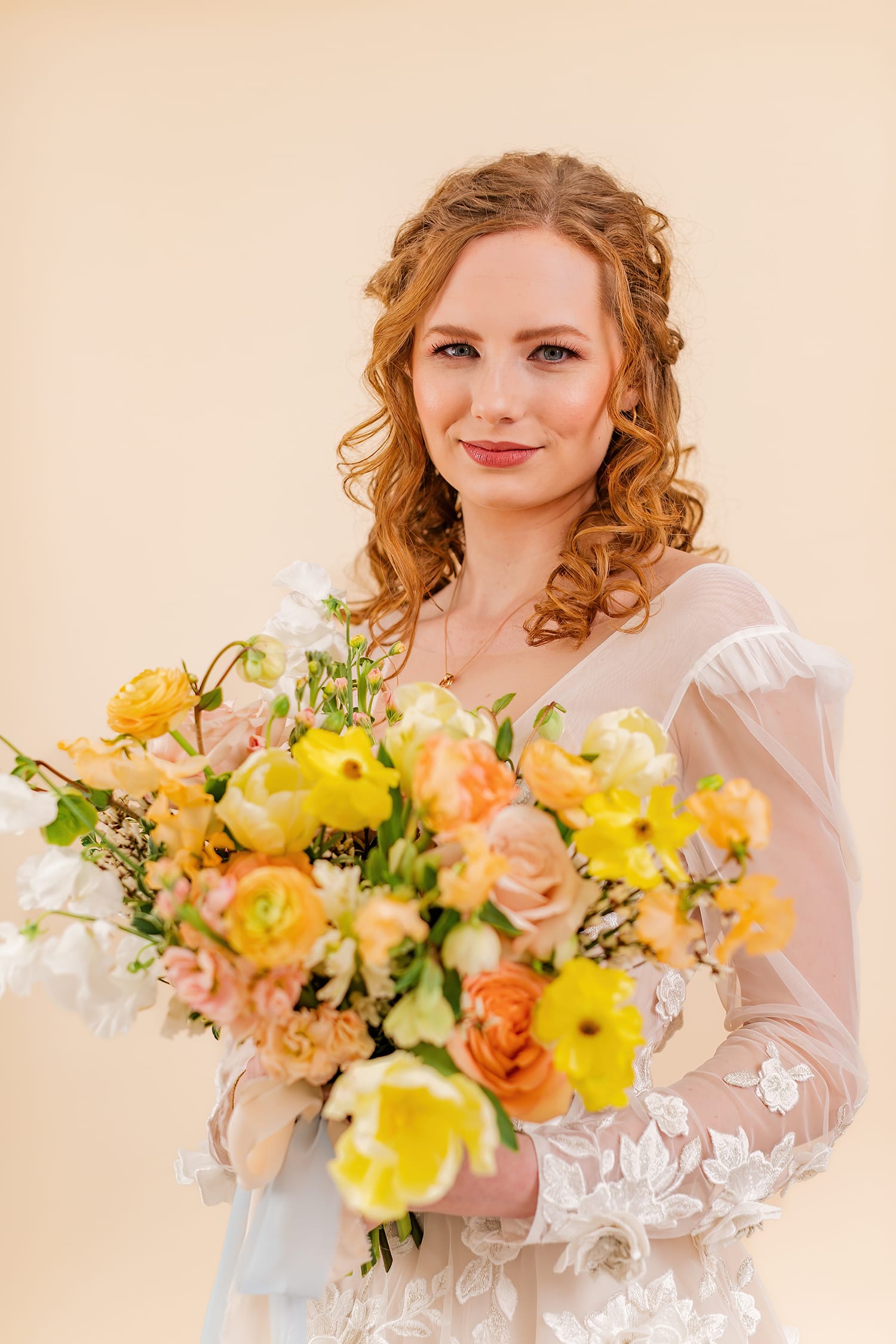
I design this way because it's the most honest way I know to make a bouquet feel like a person instead of a product.
A structured dome looks more or less the same in anyone's hands. A garden-style bouquet can't. Its asymmetry, the specific flowers I layer in, the direction the stems lean: all of it bends around you. It's the shape that best carries my whole promise: romantic, timeless, true-to-you floral design. When a bouquet looks gathered rather than manufactured, it feels personal, and that feeling is the entire point of your flowers.
It's also the most romantic shape there is. Softness, movement, a little bit of wildness: that's the atmosphere of romance I'm always designing toward. A garden-gathered bouquet feels like it belongs to a real love story, not a catalog. That's why it's the first thing I reach for, and the look many couples find me for in the first place.
The blooms, movement, and texture that make it
A garden-style bouquet is built in layers, and each layer does a different job. Here's how I think about the flowers that go into one. You don't need every category, but the best bouquets borrow from most of them.
| Layer | What it does | Flowers I reach for |
|---|---|---|
| Focal flowers | The anchors your eye lands on first | Garden roses, peonies, dahlias, ranunculus |
| Secondary blooms | Fill and support the focals, carry the palette | Spray roses, lisianthus, anemones, scabiosa |
| Airy texture | The movement and "freshly gathered" softness | Sweet peas, cosmos, astilbe, flowering branches |
| Delicate accents | The little details that make it feel personal | Lily of the valley, fritillaria, jasmine vine |
| Greenery & trailing | Draping shape and organic edges | Jasmine, clematis vine, seeded eucalyptus, ivy |
Garden roses and ranunculus are two I come back to constantly, because they do so much of the work a garden-style bouquet needs: garden roses bring that full, ruffled, old-world romance, and ranunculus add layered, papery petals and endless movement. I design your bouquet around your date, venue, colors, priorities, love story, and the vision you share with me.
Which specific flowers we use depends a lot on your season. A spring wedding often brings peonies and sweet peas, and late summer often brings dahlias and cosmos. If a flower you love isn't in season for your date, that's never a dead end. It's the start of the conversation. Part of my job is finding an in-season bloom that gives you a similar feeling.
How I make your garden-style bouquet true to you
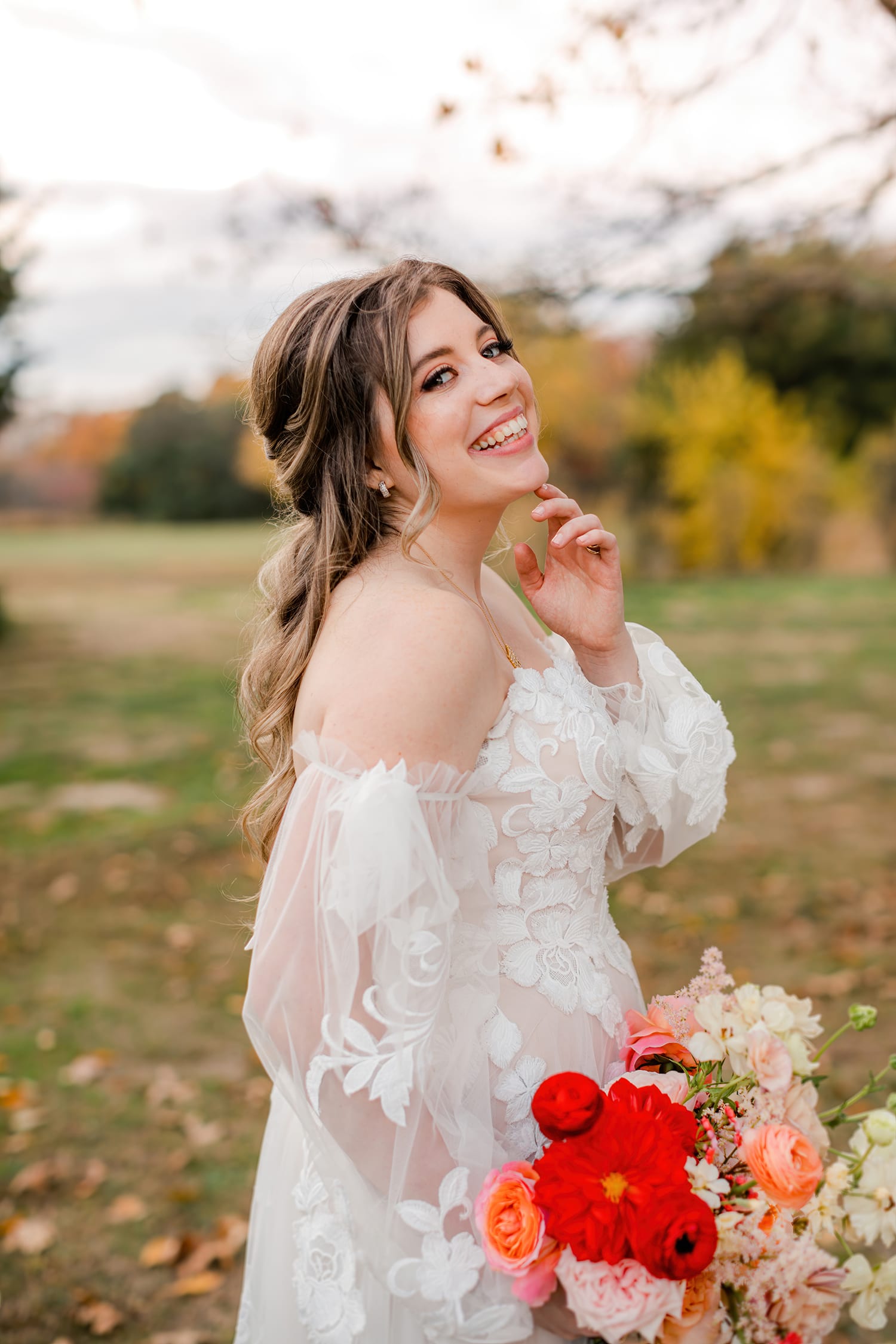
A garden-style bouquet only works when it's designed around a real person, so that's where I always start. When we meet, I want to hear your love story and learn about your date, venue, colors, and priorities: your dress, the palette you're drawn to, the feeling you want to be holding as you walk toward the people you love.
Your Pinterest board is a wonderful starting point, and I'd love to see it. I treat it as a flexible guide. I'm not looking to copy someone else's wedding; I'm looking for the thread that runs through everything you've saved, so I can design a bouquet that's unmistakably yours. Your color palette sets the mood, the season sets the flowers, and the scale (whether you want something soft and hand-tied or lush and cascading) gets built around your frame and your dress.
The result should look like it could only belong to you. That's the difference between a bouquet you carry and a bouquet you remember.
How I think about your bouquet budget
Wedding flowers are custom, so I never work from a price list. Every bouquet is quoted individually based on the types of flowers and the design. But I can tell you how I think about it, because a floral budget is really a set of priorities.
The bridal bouquet is the piece you hold through much of the day and see in many photographs, so for some couples it's where I suggest we let the budget lean. A thoughtfully layered garden-style shape reads as lush and full without needing the most expensive stem in the cooler for every layer. My promise is a calm, honest conversation about what's possible, never pressure and never a hard sell.
If you love your bouquet enough to keep it, that's a lovely thing too. A garden-style bouquet can dry beautifully, and some couples choose to preserve theirs afterward. I've written more about the dried-flower bouquet if you're drawn to something you can hold onto long after the day.
I craft designs that speak to your heart.
Frequently asked questions about garden-style bridal bouquets
What is a garden-style bridal bouquet?
A garden-style bridal bouquet is a loose, organic, slightly asymmetrical arrangement designed to look freshly gathered. It layers focal flowers, airy textures, and trailing greenery so the bouquet has natural depth and movement.
What flowers work best in a garden-style bouquet?
Garden roses, peonies, ranunculus, and dahlias make beautiful focal flowers, supported by spray roses, lisianthus, and anemones. Airy textures like sweet peas, cosmos, and flowering branches add the freshly gathered movement, while trailing greenery such as jasmine vine and clematis creates organic, draping edges.
How is a garden-style bouquet different from a traditional bouquet?
A traditional bouquet is usually a tight, round, symmetrical dome with flowers at a uniform height. A garden-style bouquet is intentionally asymmetrical and loose, with flowers set at different depths and stems that arch and trail, so it looks gathered from a garden rather than clipped into a shape.
Is a garden-style bouquet a good choice for my wedding?
If you love a soft, romantic, natural look, it's a wonderful fit, and it suits almost any venue, from a garden-lit space to an outdoor Ozarks setting. Because the shape is built around your flowers, palette, and dress, it adapts to your day rather than the other way around.
Can a garden-style bouquet be made with in-season flowers?
Yes, and I recommend it. Designing around what's naturally in season gives you flowers suited to your date and a look that feels effortless. If a flower you love isn't available for your date, I'll look for an in-season bloom that gives you a similar feeling.
If you're dreaming of a bouquet that looks gathered that morning and feels entirely true to you, I would love to hear about your day. You can see more of my work and start a conversation with me here.
Photo Credit: Jordan Brittley