
The Wedding Flower Checklist: Everything to Plan, From a Florist
A wedding flower checklist helps you plan personal flowers, ceremony pieces, reception designs, delivery, and installation. Use this list as a starting point, then keep only the pieces that fit your day.
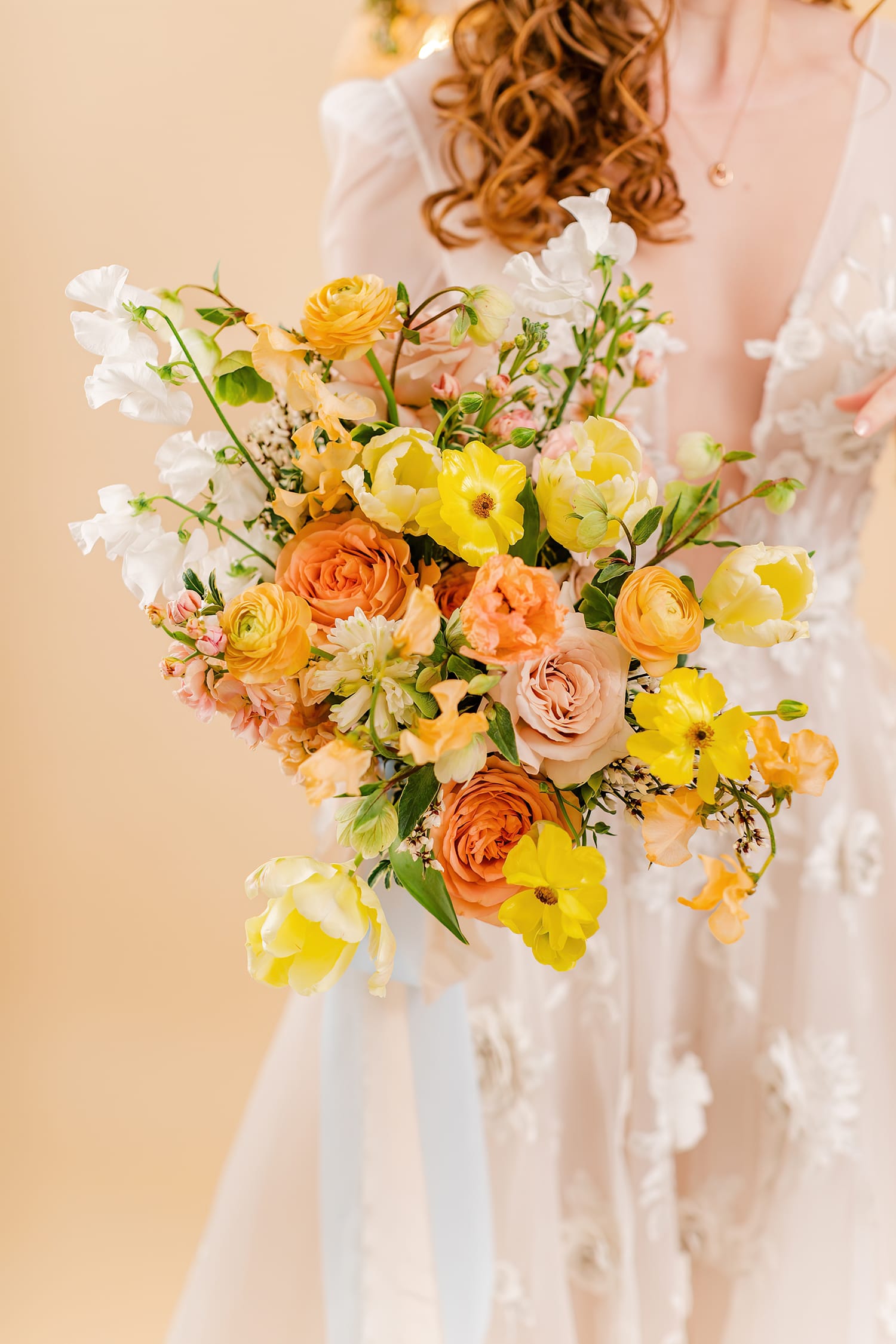
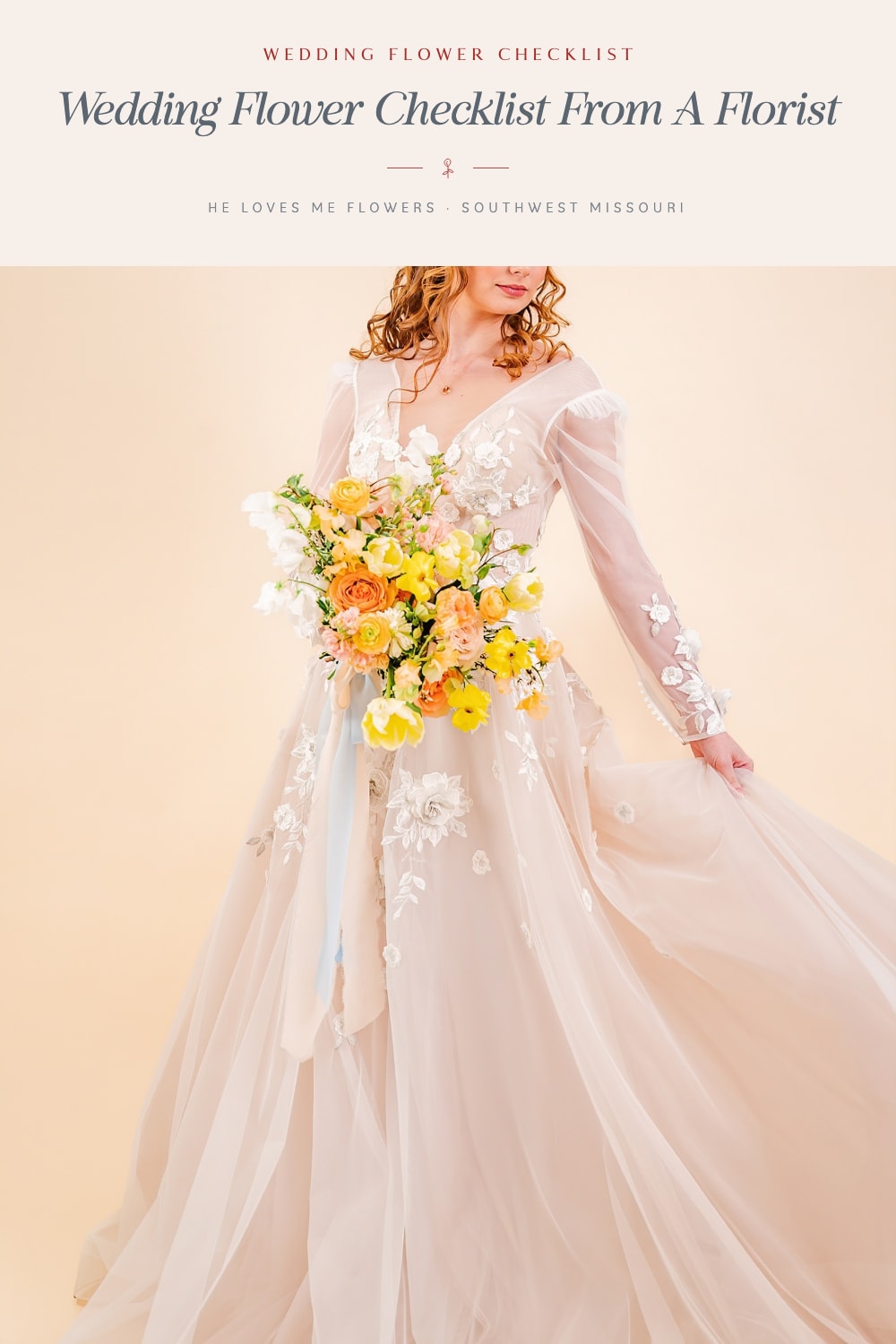
Personal flowers: the ones people carry and wear
Personal flowers are the pieces your wedding party holds and wears, and they’re the ones photographed up close all day. This is usually where I start a conversation, because your bouquet often sets the tone for everything else.
| Personal flower | Who it’s for | Notes |
|---|---|---|
| Bridal bouquet | The bride | The centerpiece of your personal flowers; sets the palette and style |
| Bridesmaid bouquets | Your attendants | Often smaller echoes of yours; can vary in size |
| Boutonnieres | Groom, groomsmen, fathers, grandfathers, ushers, officiant | Often missed during planning; make a full list of who wears one |
| Corsages | Mothers, grandmothers, special guests | Pin-on or wrist; confirm which everyone prefers |
| Flower crowns or hair flowers | Bride, flower girls | A romantic, garden-style touch |
| Flower girl petals or basket | Flower girl | Petals, a small bouquet, or a floral hoop |
| Toss bouquet | The bride | Optional; a smaller stand-in if you want to keep yours |
The items most often missed on this list are boutonnieres and corsages. It’s common to forget a grandfather or the officiant. When we meet, I walk through your family and wedding party name by name so no one who should be wearing flowers gets left out. My signature look leans loose and gathered, and there’s more on that in my guide to the garden-style bridal bouquet.
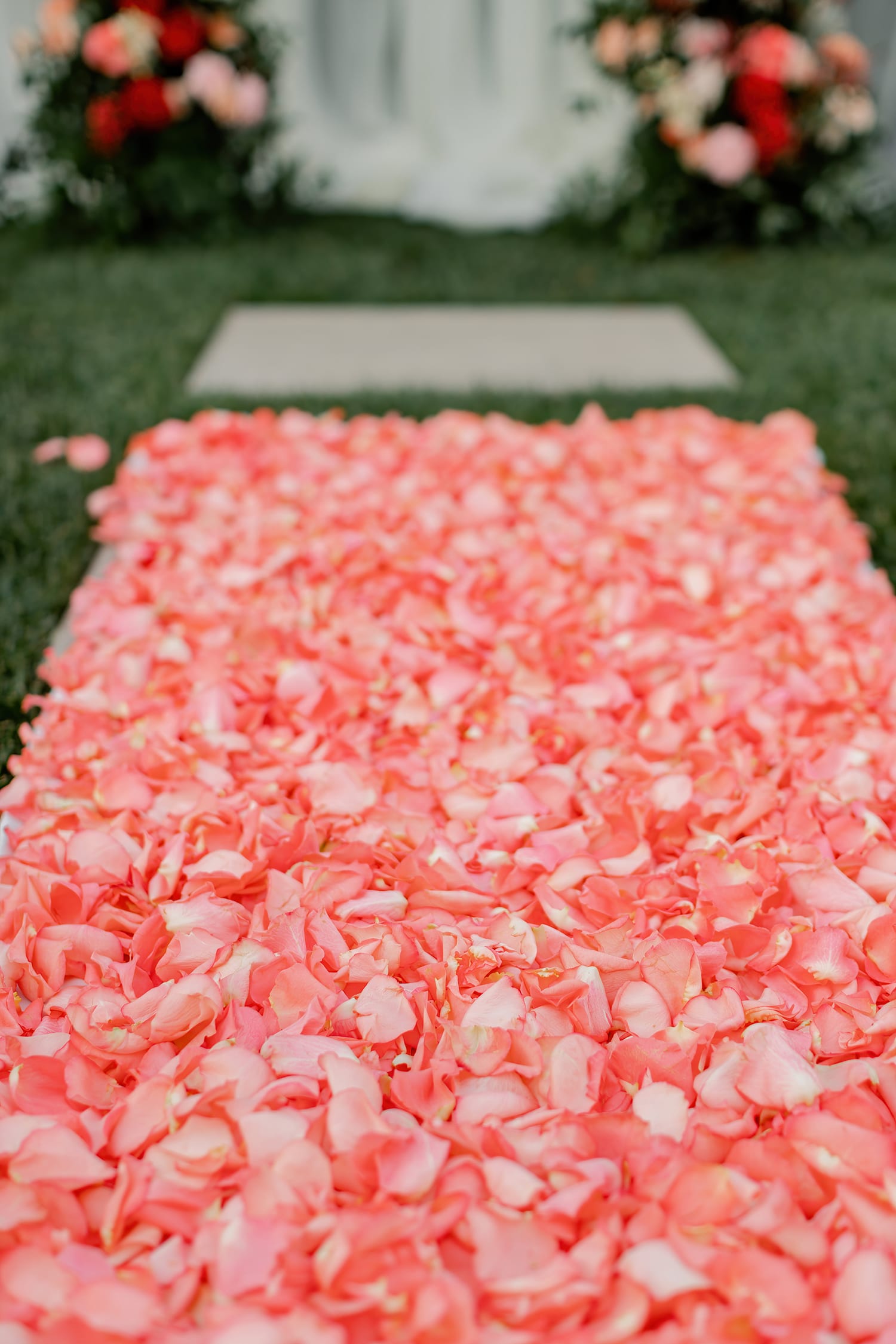
Ceremony flowers: where you say your vows
Ceremony flowers frame the single most important moment of your day. You don’t need all of these. Many couples choose one or two statement pieces, but here’s the full menu to consider:
- Arch or arbor: the structure you stand under and the backdrop of nearly every ceremony photo.
- Aisle flowers: petals scattered down the aisle, arrangements or lanterns lining it, or a soft meadow at the front.
- Altar or focal arrangements: urns, compotes, or ground pieces that anchor where you’ll stand.
- Pew or chair markers: small clusters or ribbons marking the front rows or the aisle ends.
- Welcome or sign flowers: a garland or arrangement on your ceremony sign or entrance.
- Unity table or memorial flowers: a small arrangement for a candle, a photo of a loved one, or a family moment.
A lovely way to keep enjoying your flowers is to choose ceremony pieces that can move to your reception: an arch that becomes a sweetheart-table backdrop, aisle arrangements that reappear on the tables. I break down the full ceremony menu in my guide to wedding ceremony flowers, including how I plan pieces that work twice.
Reception flowers: where you celebrate
Reception flowers carry your palette across the room and set the mood for the party. This is where the largest number of arrangements usually lives, so it’s worth being thorough:
- Centerpieces: the biggest count on your list, whether low and lush, tall and airy, or a mix down the tables.
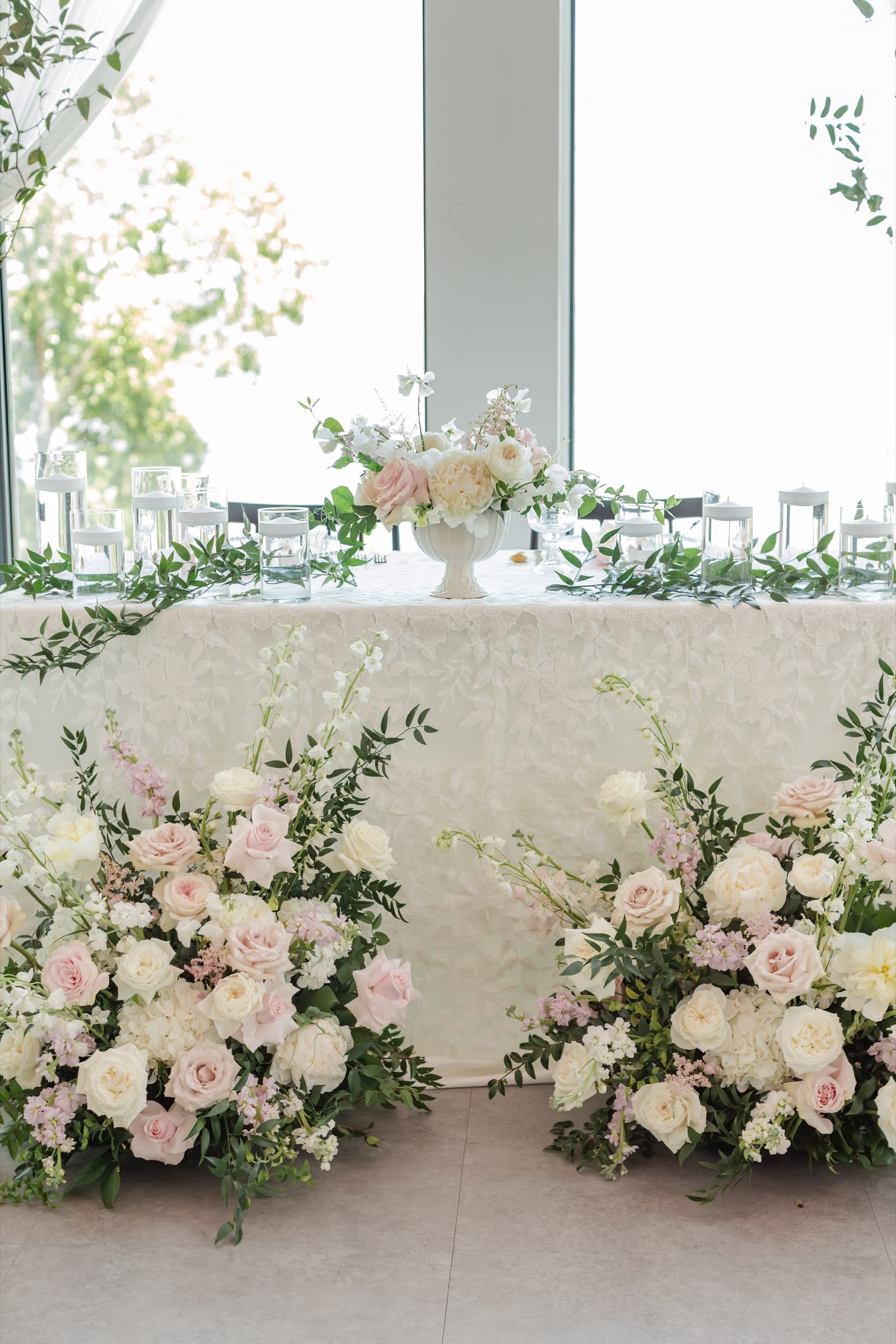
- Head table or sweetheart table: a fuller garland or grouping to distinguish where you sit.
- Cake flowers: fresh blooms on or around the cake, coordinated with your baker.
- Bar and food-station arrangements: small pieces that dress the spots guests gather.
- Escort or place-card display: a floral moment on your seating display.
- Signage and guest-book flowers: small arrangements on welcome, menu, or guest-book tables.
- Napkin or place-setting details: a single stem or sprig at each seat, if you want that touch.
- Restroom or lounge touches: small arrangements for a finished, thought-through feel.
You won’t want every one of these, and that’s the point of a checklist: to see the full picture and choose the pieces that matter to you. When we plan, I help you spend where it shows most and skip what won’t be missed.
A wedding flower planning timeline
Flowers have their own clock, and knowing it keeps the whole process calm. Here’s the timeline I guide my couples through in Southwest Missouri:
| When | What to do |
|---|---|
| 12–18 months out | Book your florist. Fall dates book quickly, so reach out even earlier for a fall wedding. |
| 6–9 months out | Nail down your color palette, overall vision, and rough arrangement list |
| 3–4 months out | Refine the design, confirm your wedding-party and family flower counts |
| 4–6 weeks out | Finalize the details as your guest count and timeline lock in |
| 1–2 weeks out | Confirm final numbers, delivery, setup, and breakdown logistics |
| Wedding week | Leave it with me; I handle sourcing, designing, delivery, and install |
I take up to two weddings each weekend, so booking early is the surest way to reserve your date, especially for a peak fall Saturday in the Ozarks. If you’re not sure what to ask when you first reach out, my list of questions to ask a wedding florist is a good place to start.
How I think about your flower budget as you build the list
Wedding florals are custom, so I never work from a price list. Every wedding is quoted individually based on the types of flowers and the design. But I can tell you how I think about it, because a floral budget is really a set of priorities.
As we go through this checklist, I help you rank what matters most and design outward from there. For many couples, that’s the bouquet and the ceremony moment. Planning pieces that move from ceremony to reception is a lovely way to keep enjoying your flowers throughout the day. If you want to know what to expect before we talk, my guide to your wedding flower quote walks through it honestly. My promise is a calm conversation about what’s possible. Never pressure, and never a hard sell.
With enthusiasm, joy, and a seamlessly stress-free experience.
Frequently asked questions about the wedding flower checklist
What flowers do I need for my wedding?
Most weddings include three groups: personal flowers (bridal and bridesmaid bouquets, boutonnieres, corsages, and any flower-girl pieces), ceremony flowers (an arch or arbor, aisle, and altar arrangements), and reception flowers (centerpieces, head table, cake flowers, and small details). You don’t need every item; a checklist helps you see the full picture and choose what matters to you.
What wedding flowers are most often forgotten?
Boutonnieres and corsages are the items most often missed, especially for grandfathers, the officiant, and ushers. Cake flowers, escort-display arrangements, and a toss bouquet may also be missed. I walk through your family and wedding party name by name so nothing and no one gets left out.
When should I book my wedding florist?
Most couples contact me 12 to 18 months before their wedding. Fall dates book quickly, so reach out even earlier for a fall wedding. Contact me after you confirm your date and venue. I will let you know whether the date is available and when we should start planning your floral design.
When do I finalize my wedding flower details?
We shape the vision and palette six to nine months out, refine the design and confirm counts around three to four months out, and lock final numbers, delivery, and setup one to two weeks before the wedding. That timeline keeps everything calm and gives your guest count time to settle before the details are set.
Can I reuse ceremony flowers at the reception?
Yes, and I love planning for it. An arch or arbor can become a sweetheart-table backdrop, and aisle arrangements can move to the reception tables. Designing pieces that work twice is a helpful way to keep enjoying your flowers throughout the day.
Your flowers should feel like the easiest, most joyful part of planning, not one more thing to worry you’ve forgotten. If you’d like a florist to walk this checklist with you and design a day that feels entirely true to you, I would love to hear about your wedding. You can see more of my work and start a conversation with me here.
Photo Credit: Jordan Brittley